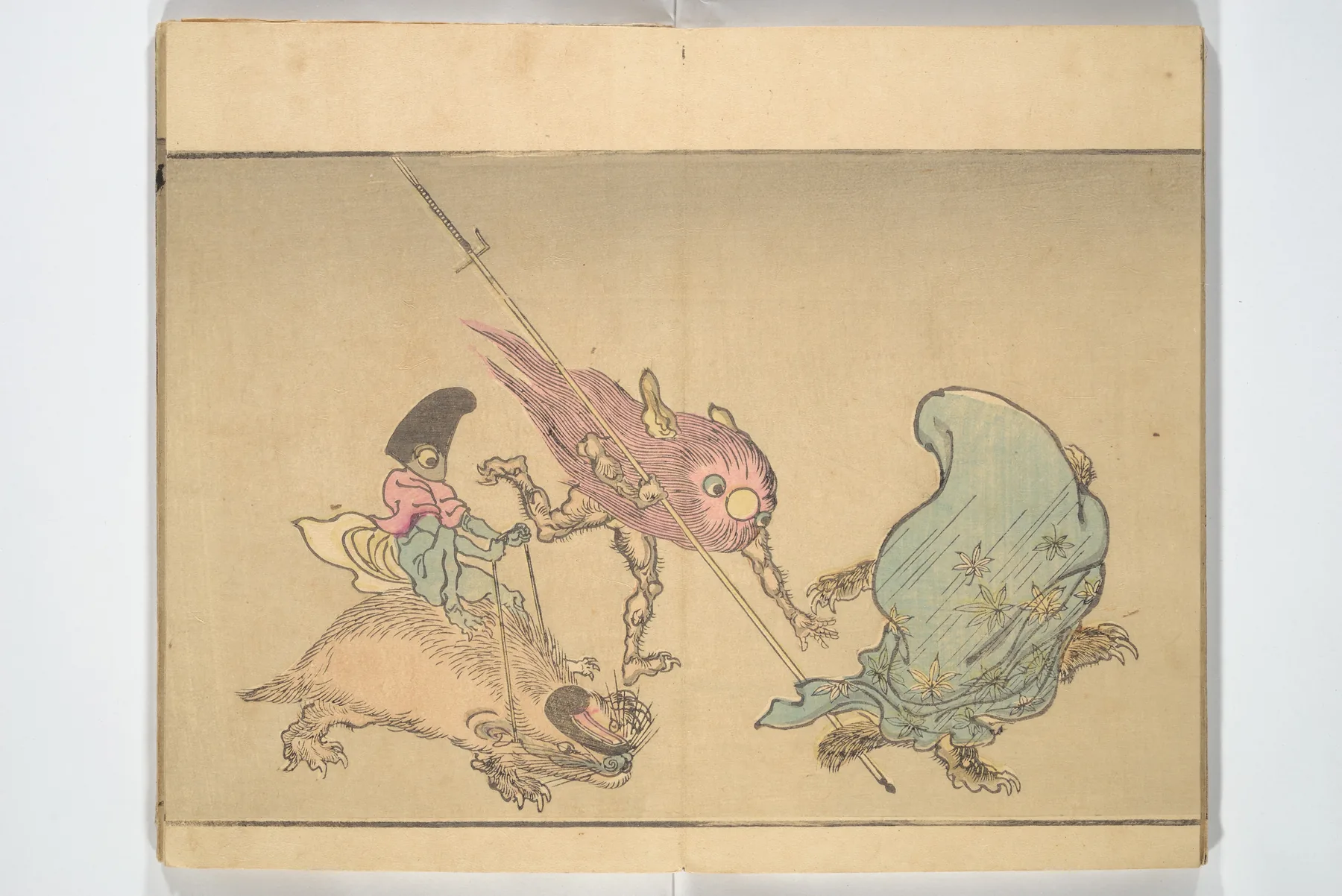
Yokai Night · Handscroll · Tachibana Gadō, 1892
Night Parade of One Hundred Demons
These monsters were once old pots and umbrellas.
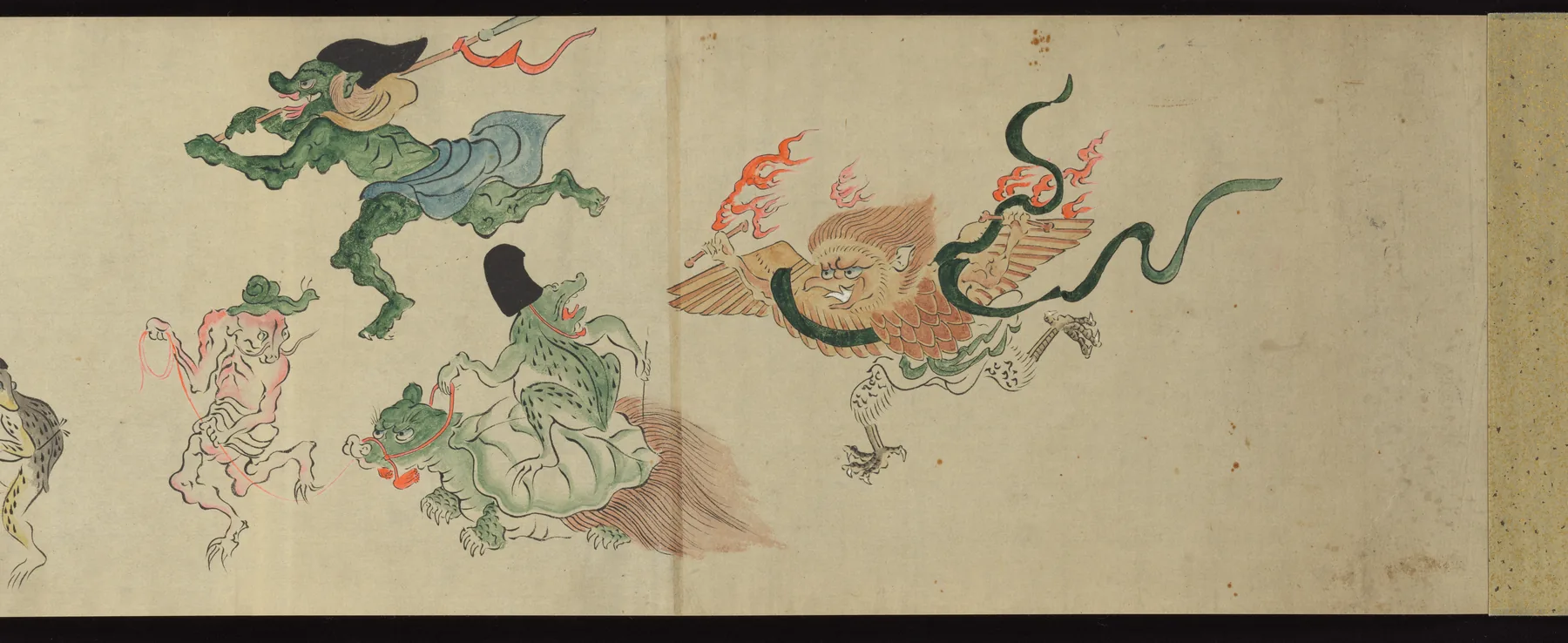
The Work
A handscroll of the "Night Parade of One Hundred Demons." As the scroll unrolls from right to left, the procession marches on.
Look Closer
Many of the creatures are old household things come to life — pots, lutes, umbrellas — more mischievous than terrifying.
The Makers
Night-parade scrolls have been copied since the Muromachi period (1500s); this one may have been inspired by Kyōsai's 1890 book.
The Legend
In old Kyoto it was said that meeting the parade could be fatal, and some nights were marked as days to stay indoors.
Japan at the Time
By 1892 Japan was modernizing fast — railways spreading, electric lights appearing. The darkness of the night was shrinking.
Culture & Values
The idea of tsukumogami: objects used for a very long time gain a spirit. It was also a reminder not to throw things away carelessly.
Meanwhile, in the World
The same year, London got the first Sherlock Holmes short-story collection, and New York opened Ellis Island.
Afterward
In the classic Shinjuan scroll, a red orb at the end sends the demons fleeing — read as the rising sun, or as sacred fire.
Listen while you look
This work stays on screen for about ten minutes in the full hour of Yokai Night, with When The Demons Walk and Tsukumogami On The Road.
Take this print home — as a tote, printed to order. Visit the shop
Is there a print you'd like to see in a future window? Request a print